

Switzerland's greenhouse gas inventory
The greenhouse gas inventory contains comprehensive emissions statistics in accordance with the requirements of the UN Climate Convention. Switzerland's national and international reduction targets are assessed on this basis. The inventory details Switzerland's greenhouse gas emissions according to the territorial principle and provides a breakdown by gas, sector and individual emission source. It also contains information on greenhouse gas emissions from international aviation and navigation and the greenhouse gas balance of land use (soil, vegetation). The greenhouse gas inventory is updated annually in April with data from the year before last.
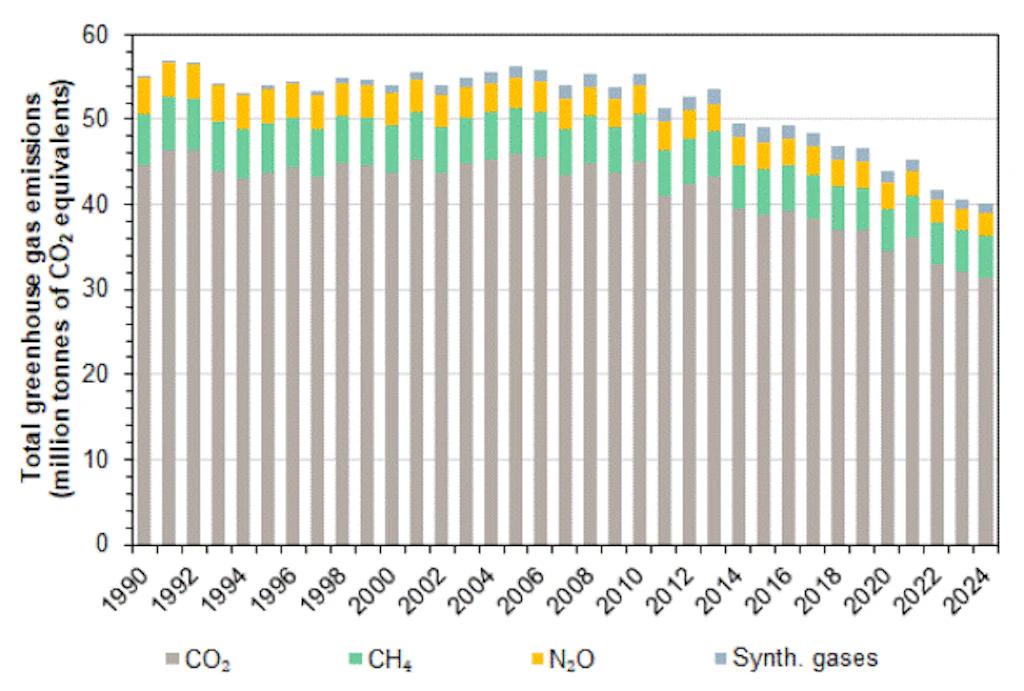
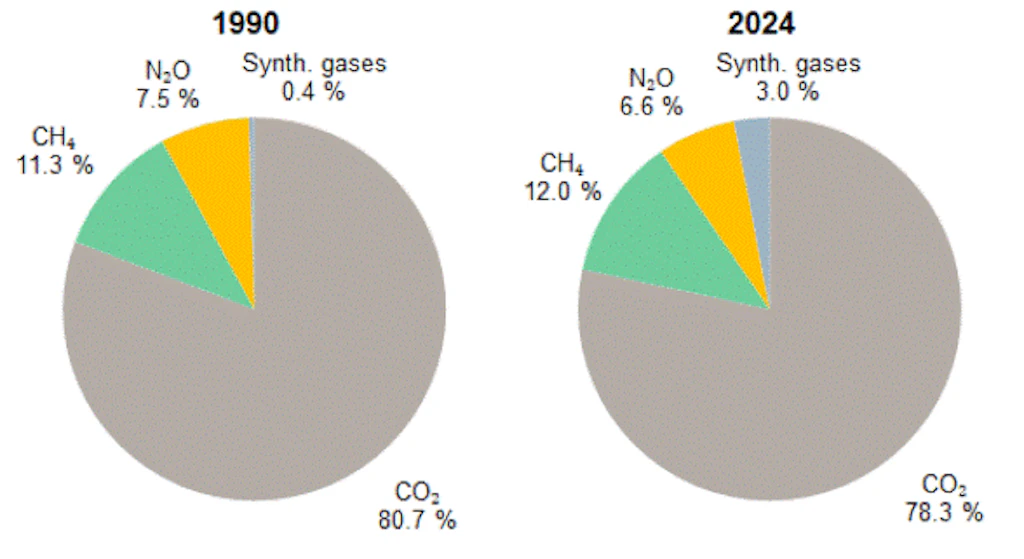
The greenhouse gas inventory contains a record of all greenhouse gas emissions in Switzerland. In addition to carbon dioxide (CO2) emissions from the use of fossil fuels, these include in particular those from industrial processes and waste incineration, as well as emissions of the other greenhouse gases methane (CH4), nitrous oxide (N2O) and synthetic gases from a wide variety of sources. The greenhouse gas inventory also includes emissions from international aviation and navigation as well as the greenhouse gas balance of land use, i.e. greenhouse gas emissions and carbon fixation by soils and vegetation. The inventory follows the territorial principle (in the case of motor fuels, domestic sales rather than domestic consumption are taken into account) and therefore does not consider emissions resulting from the production of imported goods (including imported electricity). The emissions data reported in the greenhouse gas inventory are not corrected for weather conditions.
Reduction targets and target achievement review
The greenhouse gas inventory serves as the basis for reviewing Switzerland’s international and national reduction targets. Detailed information on the reduction targets and the target achievement review is available on the following page:
Goals and strategies of Swiss climate policy
Data and publications on the current greenhouse gas inventory
Switzerland’s greenhouse gas inventory is updated annually in April with data from the year before last. The following data are based on the April 2026 inventory (next update: April 2027).
Total greenhouse gas emissions in Switzerland and breakdown by gas
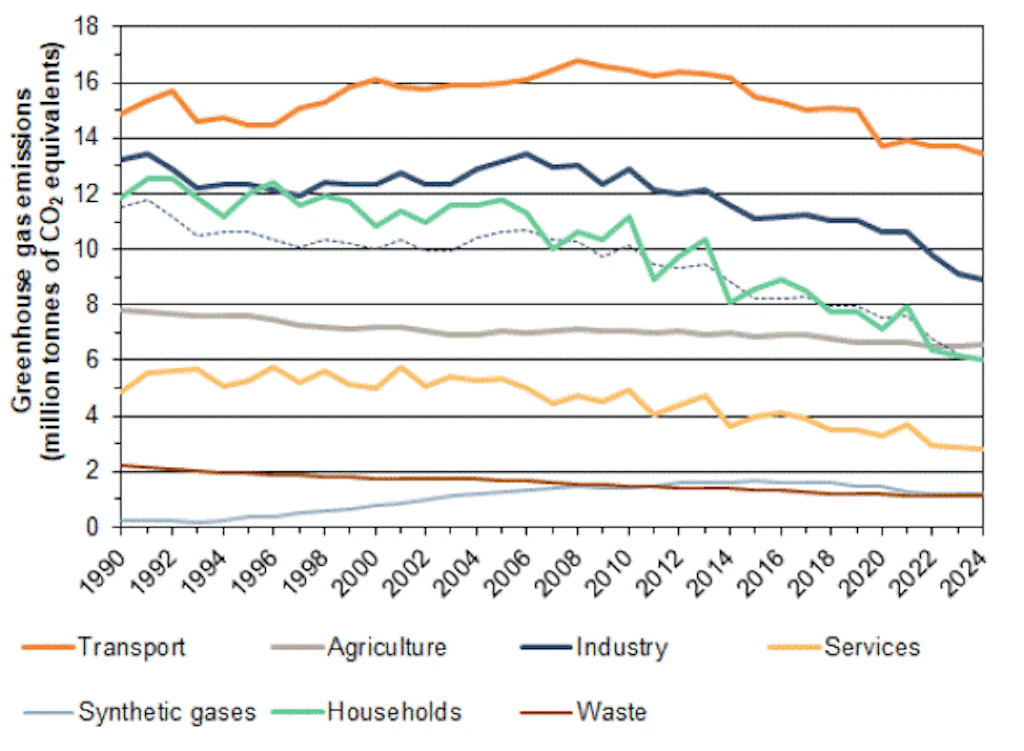
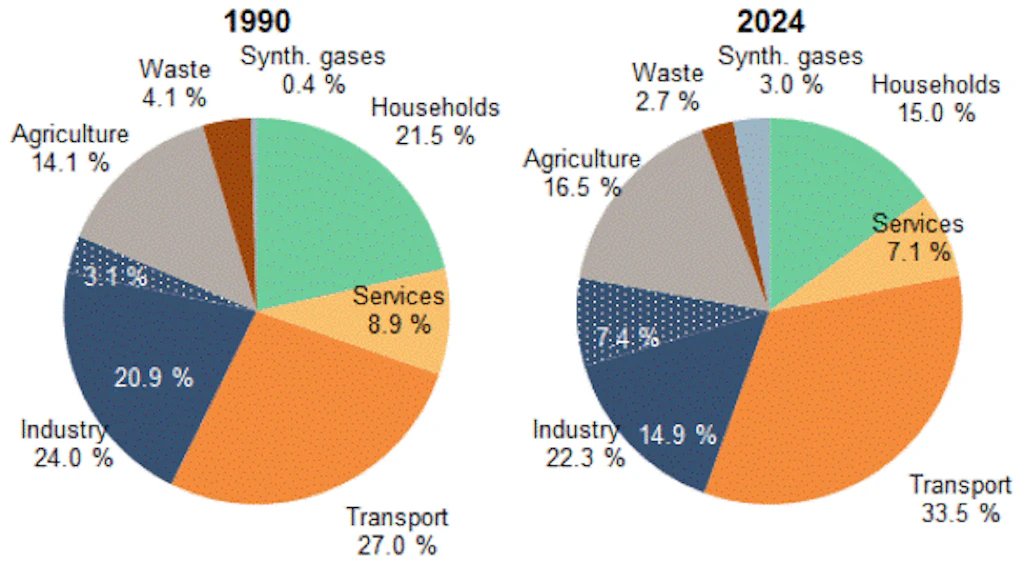
Breakdown of Switzerland’s greenhouse gas emissions by sector
Detailed information on the greenhouse gas emissions of the individual sectors is available on the subpages.
Greenhouse gas balance of land use
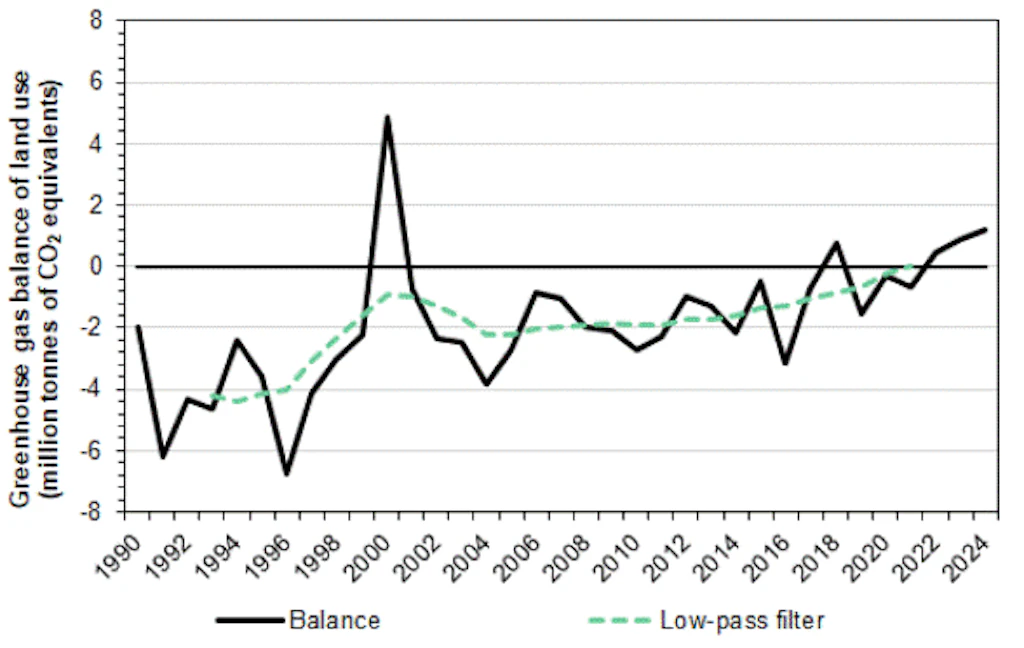
Greenhouse gas balance of land use
Greenhouse gas emissions from international aviation and navigation
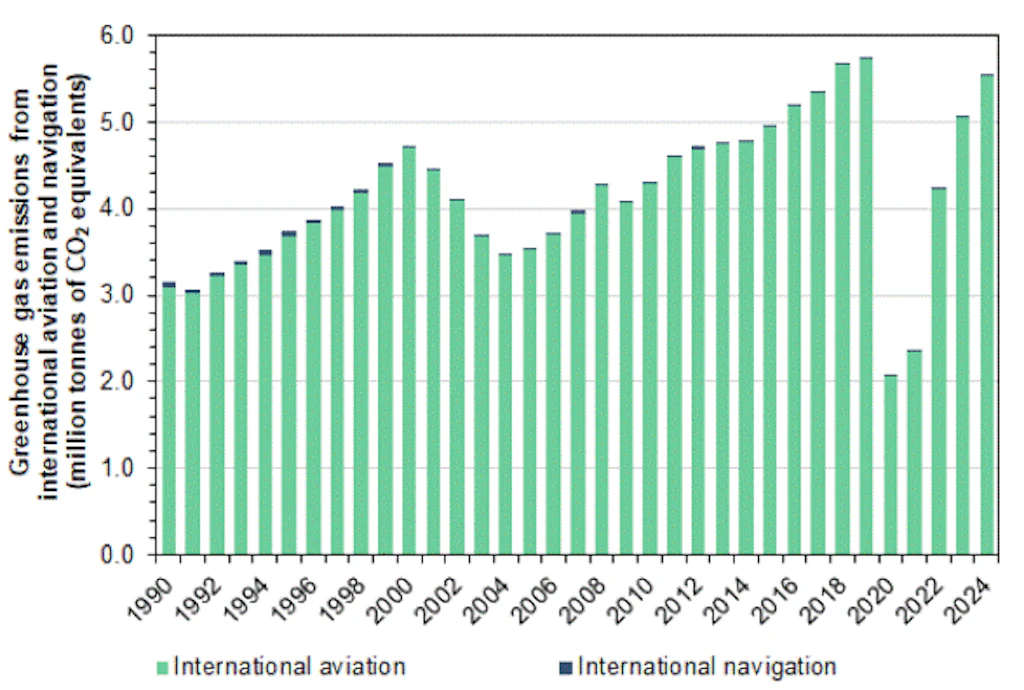
Further information, in particular on the overall climate impact of aviation, taking into account non-CO2 emissions, is available on the following website:
Greenhouse gas emissions from buildings
The Buildings sector summarises the emissions from households (residential buildings) and services (commercial buildings).
Greenhouse gas emissions from transport
The Transport sector shows the emissions for all forms of transport. However, emissions from international aviation and navigation are not allocated to the Transport sector, as they are shown separately.
Greenhouse gas emissions from industry
The Industry sector shows the emissions caused by energy use and processes in industrial activities. It also includes emissions from the incineration of waste in municipal solid waste and special waste incineration plants and as an alternative fuel in industrial furnaces.
Greenhouse gas emissions from agriculture
The Agriculture sector shows the greenhouse gas emissions from livestock, fertiliser use and energy consumption.
Greenhouse gas emissions for the Waste sector
The Waste sector shows the greenhouse gas emissions produced by waste management (not including waste incineration).
Emissions of synthetic gases
Emissions of artificially manufactured gases contribute (in some cases substantially) to the greenhouse effect. These synthetic gases are used as coolants in cold-storage rooms, refrigerators and air conditioning systems, as electrical insulators and as solvents, as well as in the production of foam materials. Thereby, unintended emissions into the atmosphere occur.
Greenhouse gas balance of land use
The Land Use sector records greenhouse gas fluxes that occur in connection with land use or as the result of a change in land use.
Greenhouse gas emissions from aviation
The greenhouse gas inventory shows the emissions from national and international aviation separately.